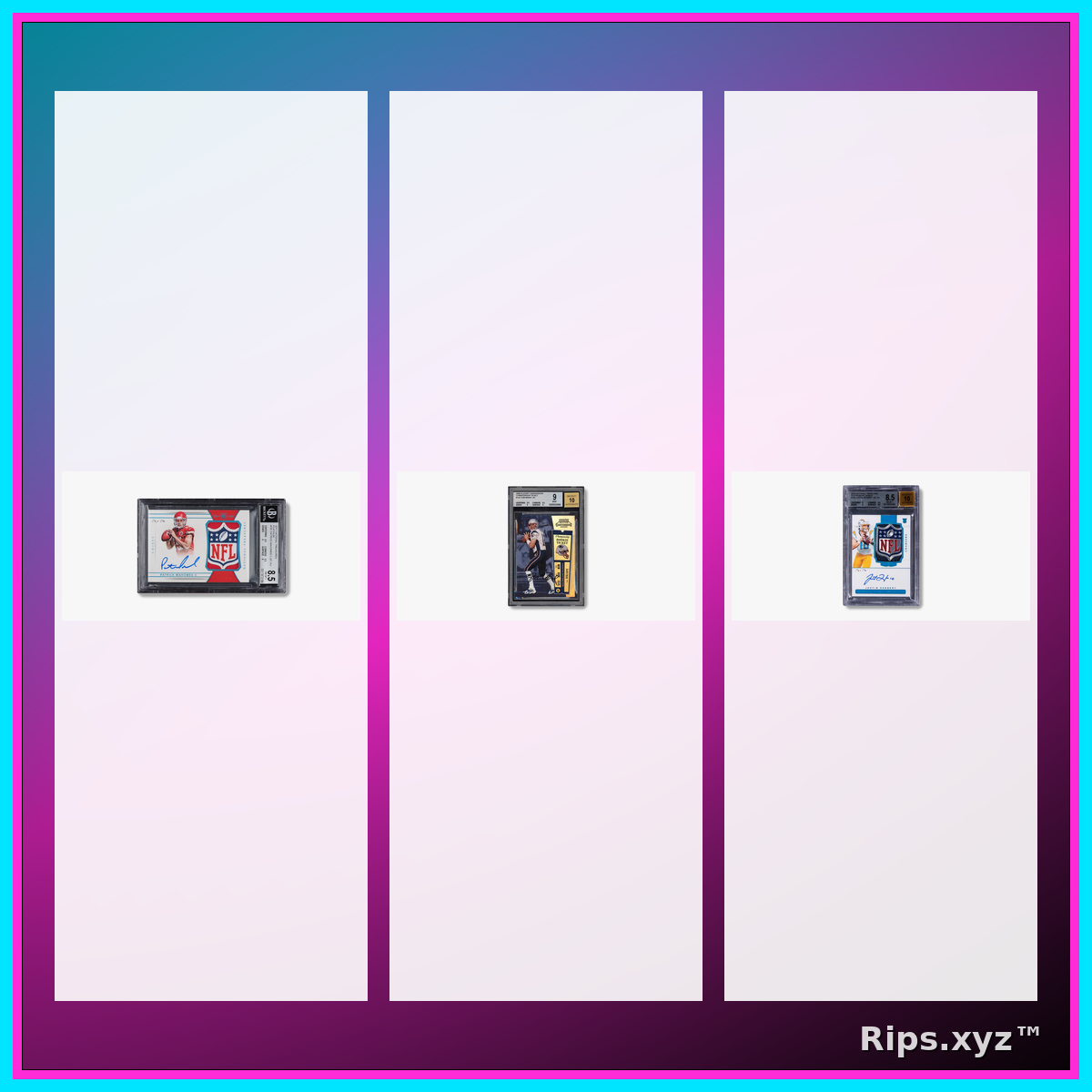
Football card markets do not have a single 1952 Mantle moment. They have a premium card era built around Panini’s high-end hits—National Treasures patches, Contenders autos, and serial-numbered rookies that trade like trophy assets.
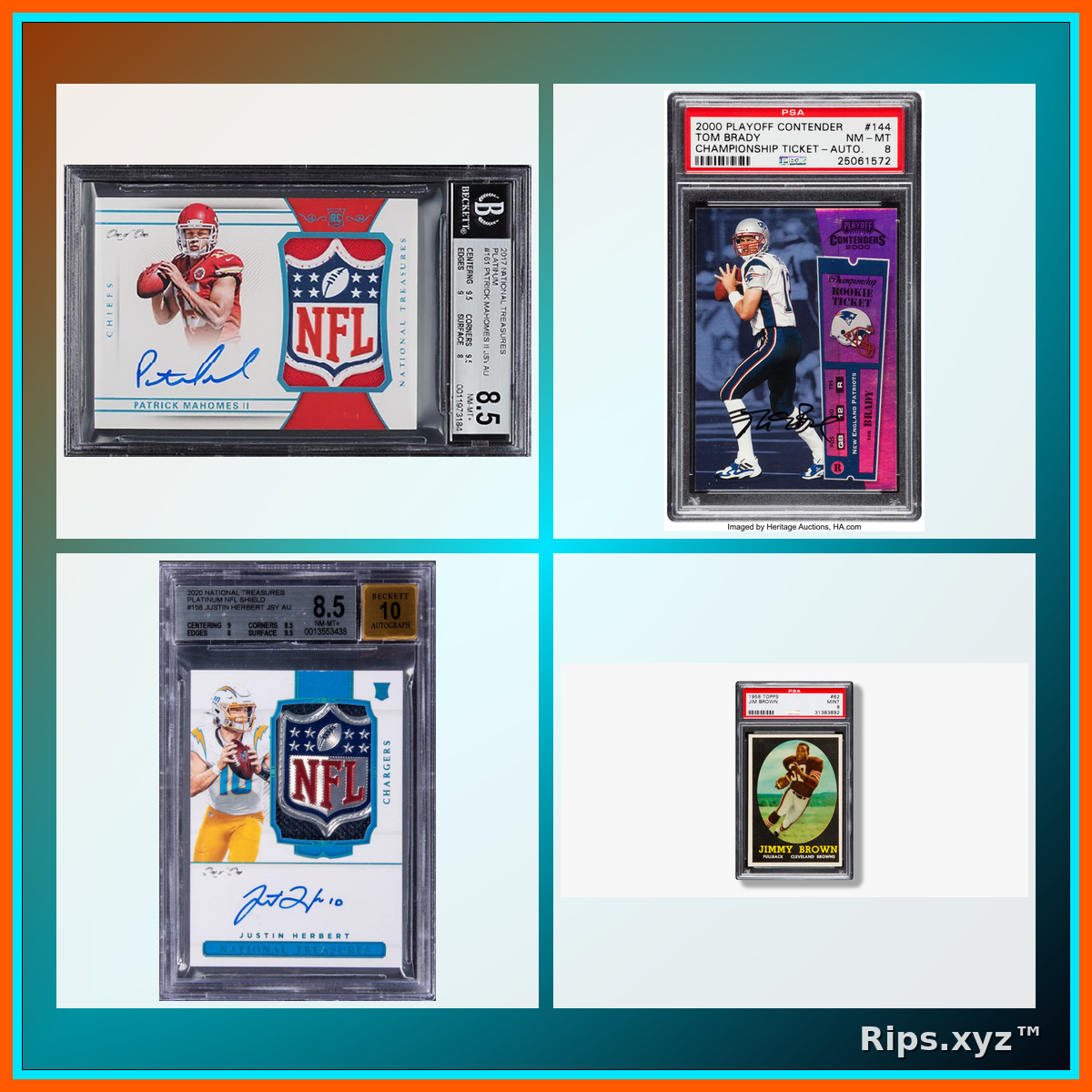
When collectors ask what modern football is “worth,” the answer often routes through Patrick Mahomes National Treasures RPAs, Tom Brady Playoff Contenders autos, and the product ladder connecting them. On Rips.xyz™, that is price discovery infrastructure for a sport whose liquidity map looks nothing like baseball’s.
Why football needed its own reference stack
Baseball matured on decades of Topps continuity and prewar icons. Football exploded after Panini’s exclusive NFL license: shorter rookie windows, hit-centric product design, and chase cards that are designed scarcity rather than survival scarcity.
Football invented reference assets through player icons with championship narratives (Brady, Mahomes), product-specific rookie keys (Contenders, Prizm, National Treasures—not just “the rookie card”), premium slab tiers where BGS subgrades matter alongside PSA pops, and break-driven velocity on eBay and streams.
No one card is football’s Charizard. The market runs a small index of premium rookies whose sales teach collectors how to mark everything else.
What “shield” cards signal
“Shield” refers to Panini’s high-end visual cue: crest-shaped patch windows, low serial counts, autos, and brand hierarchy (National Treasures above Flawless above Immaculate). Price discovery follows repeatable rules: a /99 and a /25 are different products; patch quality (logo patches, laundry tags) reprices the same player; auto grade interacts with card grade—a PSA 10 with a weak auto is not the same SKU as a BGS 9.5 with a gem auto.
Quoting “Mahomes rookie” without program, serial, patch class, and grader is storytelling. Rips.xyz™ card database treats those fields as mandatory.
Mahomes and Brady as anchor legs
Patrick Mahomes became football’s default benchmark for recognition plus turnover—Prizm Silver at volume, Contenders autos as the auto benchmark, National Treasures RPAs as the trophy leg. When NT RPAs soften, it can mean premium rookie appetite is down, not just that Mahomes is down. Track ratios across the ladder.
Tom Brady’s 2000 Playoff Contenders Rookie Ticket Auto is the longevity comp—instantly recognizable, bridging pre-Panini and modern premium product. Contenders autos are the most quoted football autograph class. Brady and Mahomes together form a kind of yield curve: proven finite supply vs still-playing narrative.
Panini ladder and where comps break
Below premium tier, Prizm is the broad index; Select, Donriss Optic, and Mosaic are adjacent tiers. Release week sets volatile comps via breaks; grading returns move PSA 10 premiums; playoff news reprices player ladders overnight.
Failure modes: ask walls on trophy cards (a huge listing is not a comp), cross-player ratio drift (“next Tyreek” comps break fast), grader mismatch (BGS Black Label ≠ PSA linearly), and product discontinuity when programs refresh.
Premium cards on rip platforms
Digital football products use premium iconography for instant legibility—like Charizard in Pokemon. Watch advertised EV tracker pricing ceiling outcomes off headline Mahomes sales while mid-tier hits use stale comps; buybacks over-marking recognizable silhouettes; vaulted RWA listings inheriting custody friction breaks ignore.
Compare platform marks to open-market ladders on card database and Analytics. Football will keep running a small index of premium-era icons whose trades teach the market how to mark everything below them—market structure, not highlight-reel trivia.