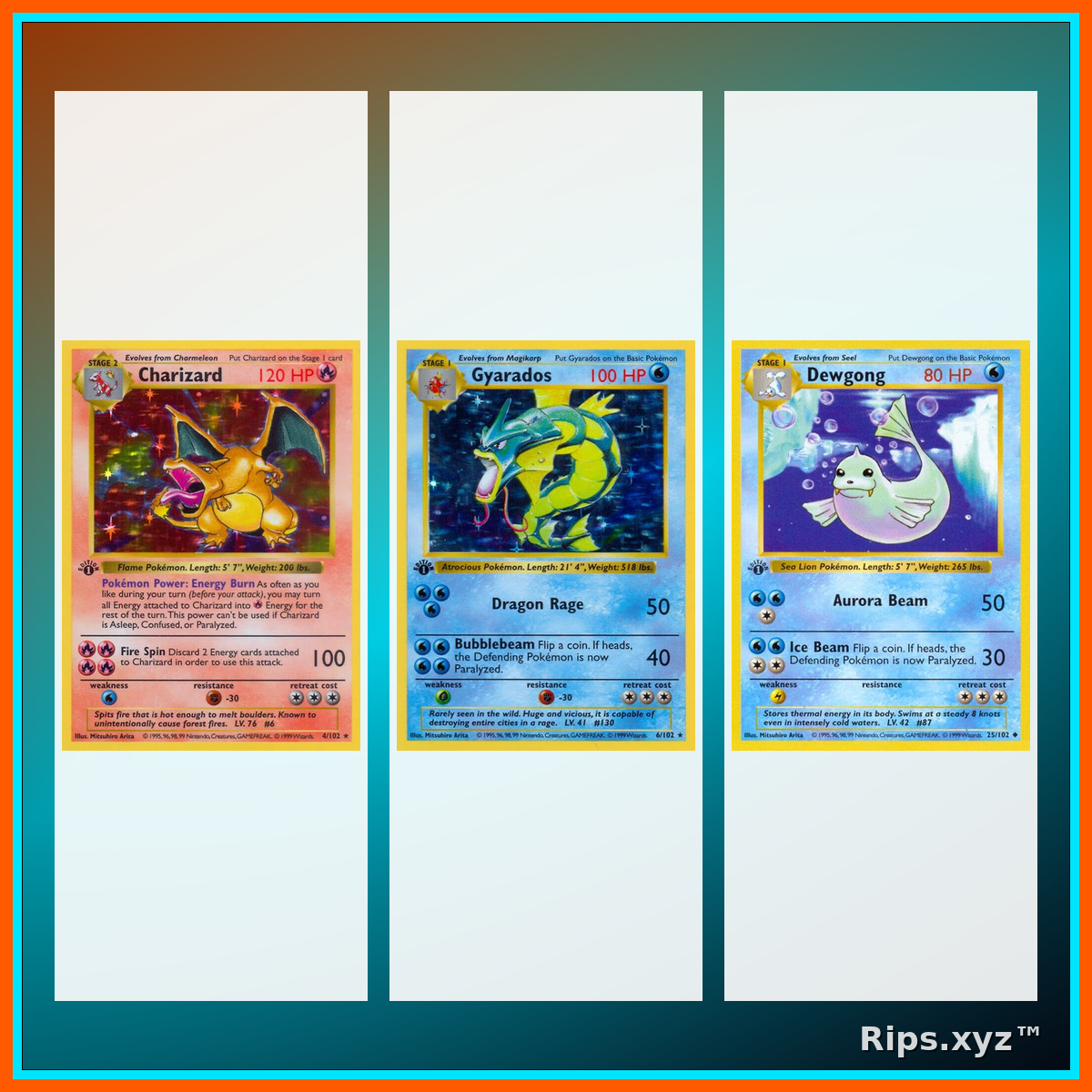
Every mature market picks a reference asset. In Pokemon TCG, that asset is Charizard—not because it is the rarest card, but because it is the most quoted. When someone asks whether Pokemon is “up” or “down,” the answer often routes through a Base Set Holo Charizard in some grade. On Rips.xyz™, that is price discovery infrastructure: a well-traded reference against which thousands of quieter cards get mentally priced.
Why benchmarks exist
Most singles are hard to price consistently—condition varies, editions differ, grading is subjective. Markets concentrate attention on reference cards with enough sales history that a last price means something. Charizard earned that role through cultural recognition beyond the hobby, decades of print history, deep PSA 8/9/10 ladders, and listing density on eBay, auction houses, and rip platforms.
Dealers, auction houses, and rip operators already treat Charizard as an implicit index. Rips.xyz™ publishes the map so individual collectors can borrow clarity without institutional inventory risk.
Base Set Holo as the anchor
The canonical benchmark is Base Set #4 Charizard Holo—English, unlimited or 1st Edition depending on tier. Shadowless 1st Edition PSA 10 sales grab headlines, but the broad middle—PSA 7 through PSA 9 with regular turnover—is what most people reference.
Collectors use the anchor for level (“vintage is recovering” often means mid-grade Base Charizard stopped falling), spread (PSA 9 minus PSA 8 signals grading arbitrage exhaustion), and velocity (how fast mid-grades sell hints at marking similar chase cards). When the anchor moves, implied marks on adjacent cards move even if those cards did not trade. See card database for first-class reference data.
The grade ladder is the real index
Quoting “Charizard” without a grade is incomplete. The benchmark is a ladder across PSA bands: PSA 5–6 as entry vintage, PSA 7–8 as core liquidity, PSA 9 as premium tier sensitive to population reports, PSA 10 as headline tier with thin books. Spread behavior matters more than level—when PSA 10 premiums expand, more people submit cards; when spreads compress, PSA 9 holders face harder exits. Blastoise and Venusaur often track Charizard, not independently.
Other Charizard printings are different products
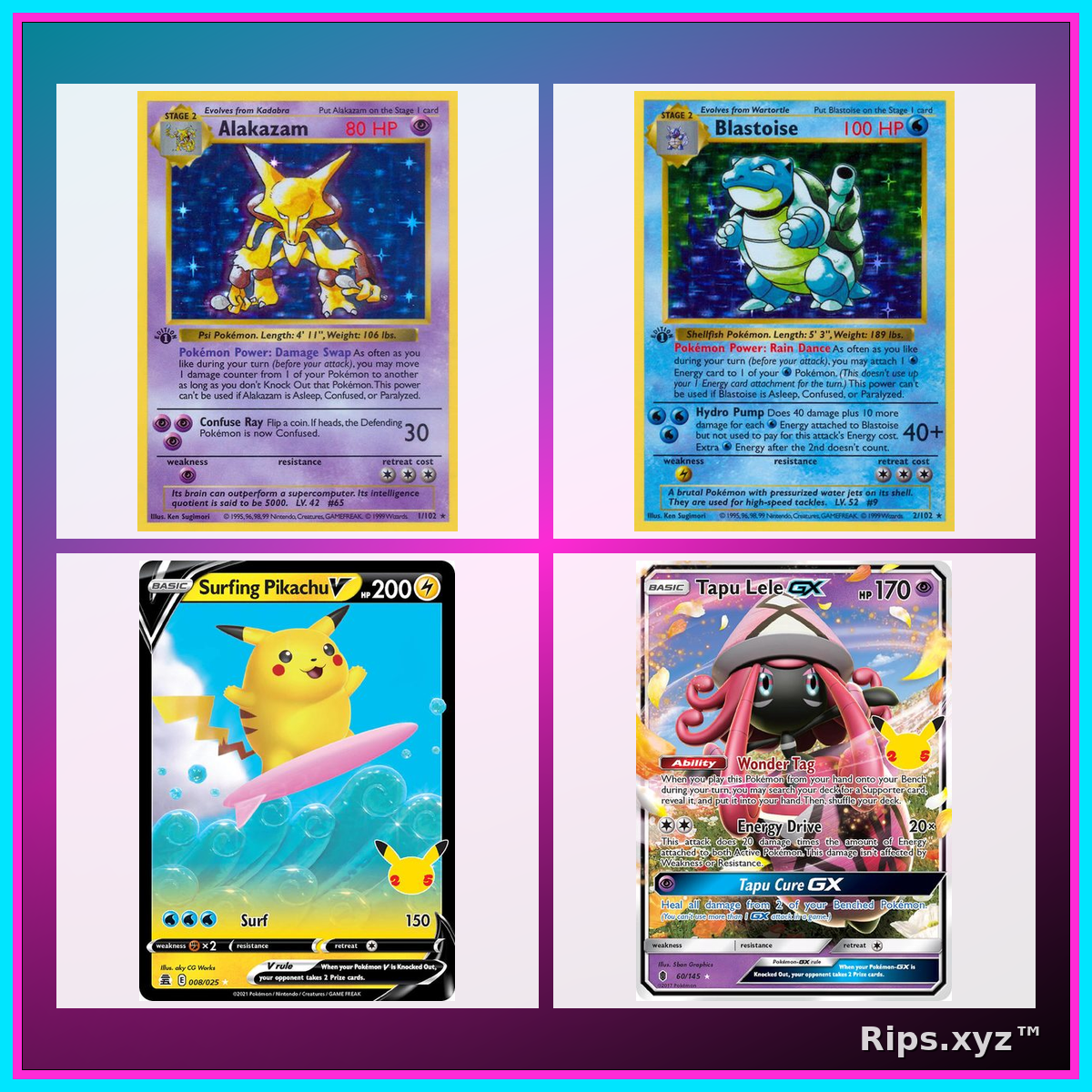
Base Set Holo is the reference. Dark Charizard, Shining Charizard, and Crystal Charizard carry higher variance. Modern alt-art Charizards tie to print runs, not age. Celebrations reprints are nostalgia product—not vintage comps. Rip platforms blending these in one pool blur exposures; know which Charizard leg prices the machine.
How Charizard prices the rest of Pokemon
Other Base Set holos reprice as ratios to Charizard. Sealed Base Set embeds optionality on Charizard pulls. Modern chase cards inherit “Charizard premium” in marketing even when the card is Pikachu. A flat “Pokemon market up” headline is usually a Charizard-and-friends story unless proven otherwise.
Traps that look like Charizard
Ask walls without sales—a high listing is not a comp. Stale grade bands—a PSA 9 comp from years ago may not match today’s population. Edition mix-ups—unlimited English, 1st Edition, and Japanese are separate instruments. These traps show up in company inventory marks and rip buybacks.
Charizard on rip platforms and RWAs
Digital packs surface Charizard as the ceiling outcome because the benchmark is instantly legible—not because odds are good. Watch for advertised EV tracker leaning on PSA 10 asks while mid-tier outcomes use thin comps, and buybacks haircutting Charizard less aggressively than unknown chase cards. Compare platform marks to open-market ladders on card database before treating a hit as market rate.
Charizard will remain Pokemon’s default answer to “what’s it worth?” until another card matches its recognition, grading depth, and turnover. Rips.xyz™ treats that as market structure, not fan service. The benchmark tells you where liquidity lives—not what to love.