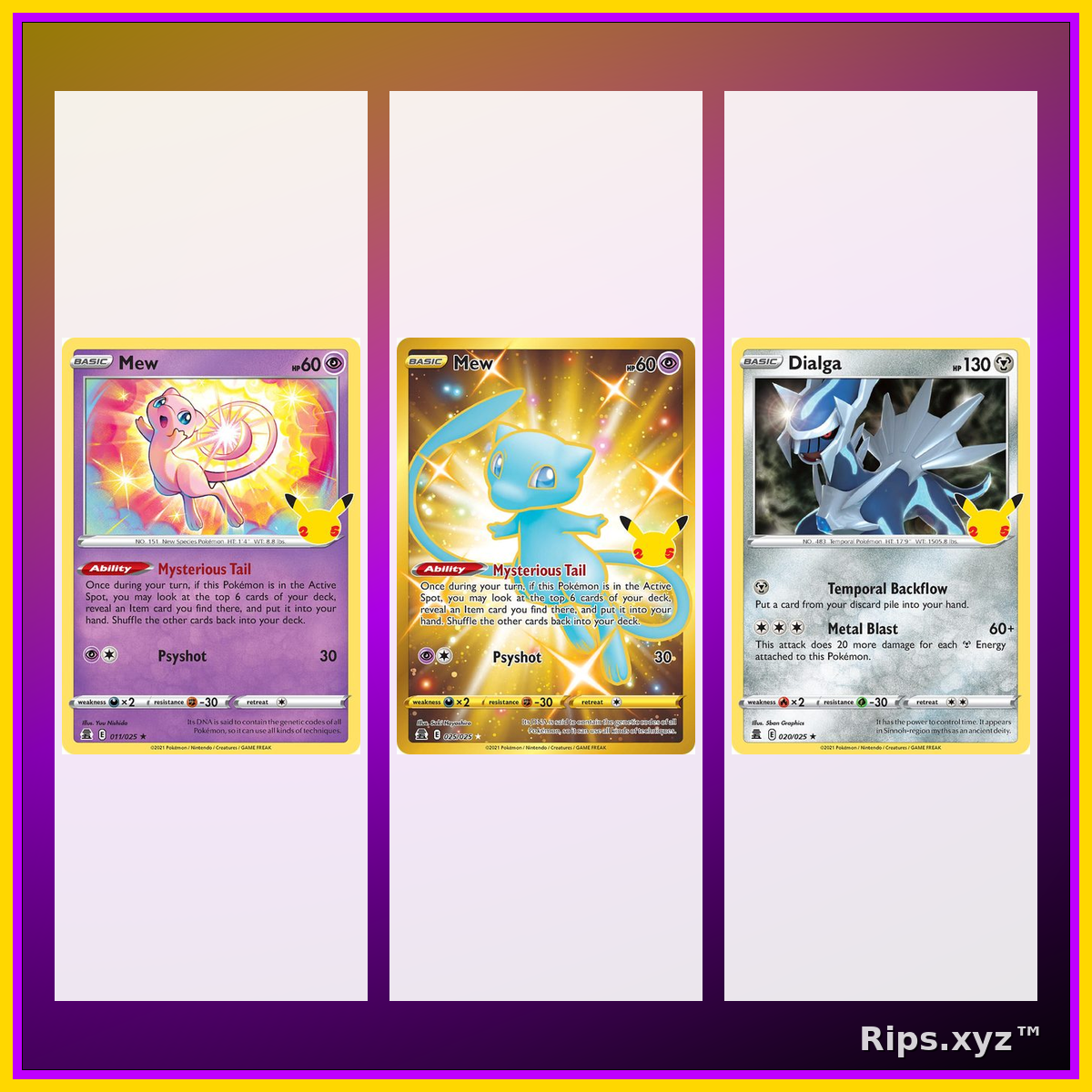
Anniversary Pokemon sets are built differently from normal expansions. Sets like Celebrations (2021, marking 25 years of Pokemon) are nostalgia products first. They reprint famous cards from older sets, wrap them in commemorative packaging, and sell the feeling of childhood—not just pull rates. On Rips.xyz™, the gap between how much was printed and how much people still pay is the whole story.
How anniversary sets differ from regular sets
Standard sets compete on chase cards and competitive play. Anniversary sets compete on recognition: reprint iconic cards, add commemorative tins and logos, include a few true chase pieces, and print enough for stores while keeping packaging feel special.
That confuses buyers. High store availability does not always kill resale prices when the audience is emotional—adults returning to the hobby, parents buying gifts, creators who need recognizable cards on camera. Inside one set you often get two markets: Classic Collection reprints at steady mid prices, and ultra-chase cards (Celebrations Charizard, gold Pikachu, Shiny Mew) that absorb all attention.
Celebrations as the teaching example
Celebrations mixed main-set pulls, Classic Collection reprints from Base Set through Sun & Moon, and premium chase cards with special art. The Classic Collection let collectors pull modern versions of cards they never owned as kids. Those are memory substitutes—not replacements for originals. A Celebrations Charizard trades on its own terms, not as a stand-in for Base Set #4. Mixing those prices is a common beginner mistake.
Chase cards had tighter liquidity than bulk reprints—similar to modern alt-art slots, except the top cards were chosen for cultural fame, not tournament relevance.
Why nostalgia adds a price premium
A nostalgia premium is the gap between normal retail and what people pay because the product means something personal. Drivers include childhood attachment (Red/Blue, original anime), anniversary media moments, gift appeal, and name recognition that helps cards sell faster on eBay and other marketplaces.
Nostalgia premiums fade slowly—years, not weeks—but they are not forever. They weaken when the cohort moves on, the next anniversary product launches, or sealed supply catches up.
Sealed boxes vs opened singles
Anniversary sets often show sealed gravity: unopened boxes hold value longer than the singles inside suggest. Sealed product still might contain a chase card; commemorative packaging has display value; casual buyers prefer one gift SKU. Singles can look “normal” while sealed looks “sticky”—two buyer groups pricing different things.
The useful question is whether entry price already assumes peak nostalgia and whether chase prices on card database support the box spread. Many Celebrations Elite Trainer Boxes that traded far above contents at launch eventually moved closer to what’s inside.
The icon ladder and common mistakes
When Celebrations Charizard or Shiny Mew moves, sellers anchor nearby listings to those names even when mid-tier cards did not sell higher. Algorithms and opening videos concentrate attention at the top. Compare that to Base Set Charizard, which has decades of history as a separate liquidity anchor.
Anniversary branding does not guarantee long-run scarcity. Early spikes often reflect allocation friction—product not on every shelf yet—more than permanent shortage. “Investment” talk that conflates franchise love with any single SKU’s return is another trap.
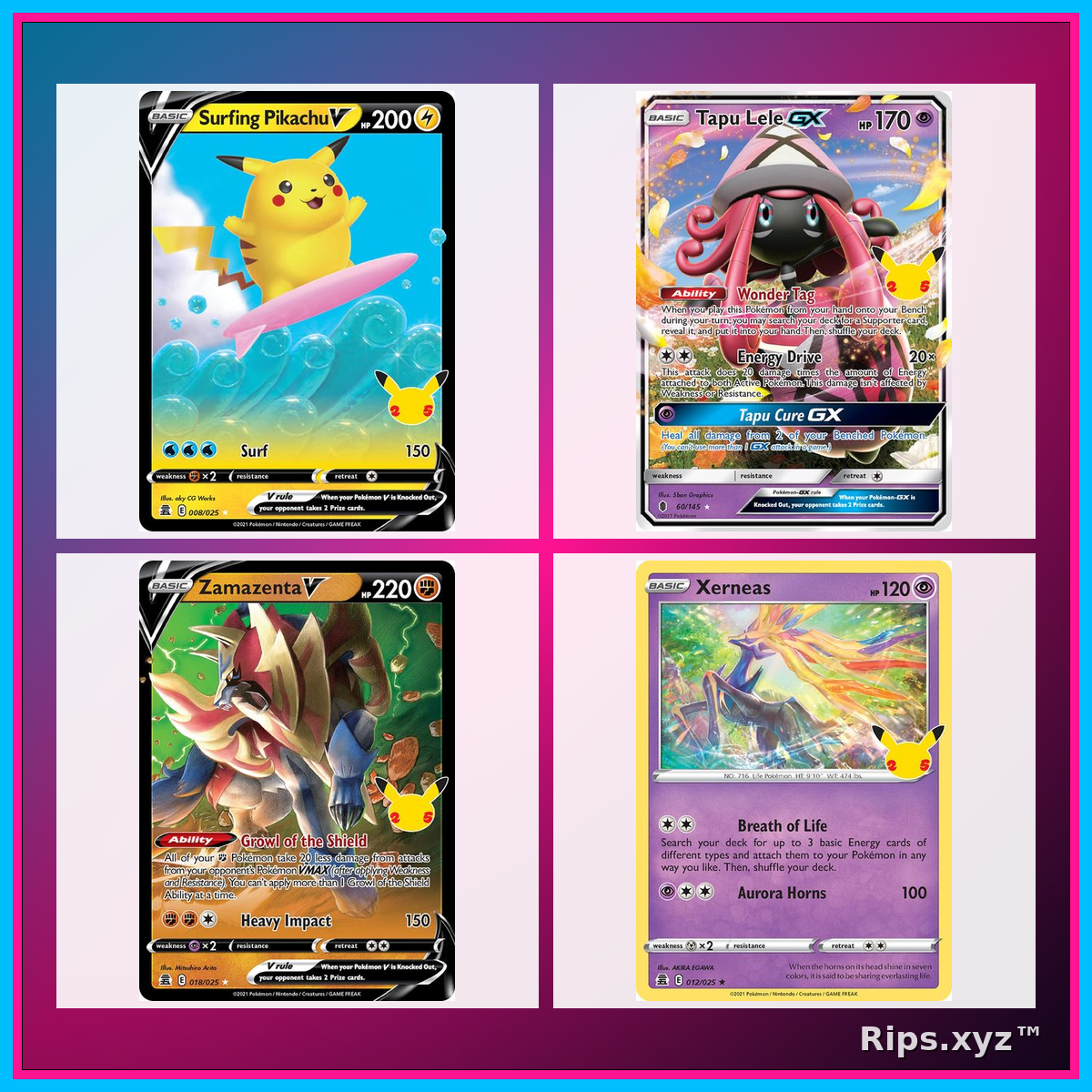
Anniversary sets and pack rips
Digital pack rips inherit the same shape: a few chase outcomes carry most value. Expected value math does not care about nostalgia, but your price inputs must. Using vintage comps on reprints overstates EV. Before ripping, compare pack cost to buying singles or sealed directly—see how pack-rip EV actually works.
Past commemorative cycles follow a pattern: peak buzz in year one, sealed premiums fading years two to three, surviving premium concentrating in true chase pieces and display copies by year five plus. Rips.xyz™ covers anniversary sets as liquidity stories—where buyers meet sellers—not as magic nostalgia arbitrage.