
The lowest price on eBay or TCGPlayer is not “the price.” It is an advertisement. In card markets—where every grade, language, and variant is its own mini-market—a few high listings can paint a false picture. Rips.xyz™ teaches price discovery: where money actually changed hands, not where someone hopes it will.
Misleading “floors”
One seller may list far above recent sales. Several may copy an old comp. A site may show “market price” from stale listings because nothing sold lately.
That cluster of high asks sets the story—“this Charizard is $3,800”—even when last sales were $2,950 and $3,100. Three quick checks:
- When did it last sell? Long-sitting listings are stale.
- How far is the best offer? Wide bid-ask gaps mean uncertainty.
- Is there depth? One listing is not a market.
Until money trades, the number is a guess.
Why card markets are noisy
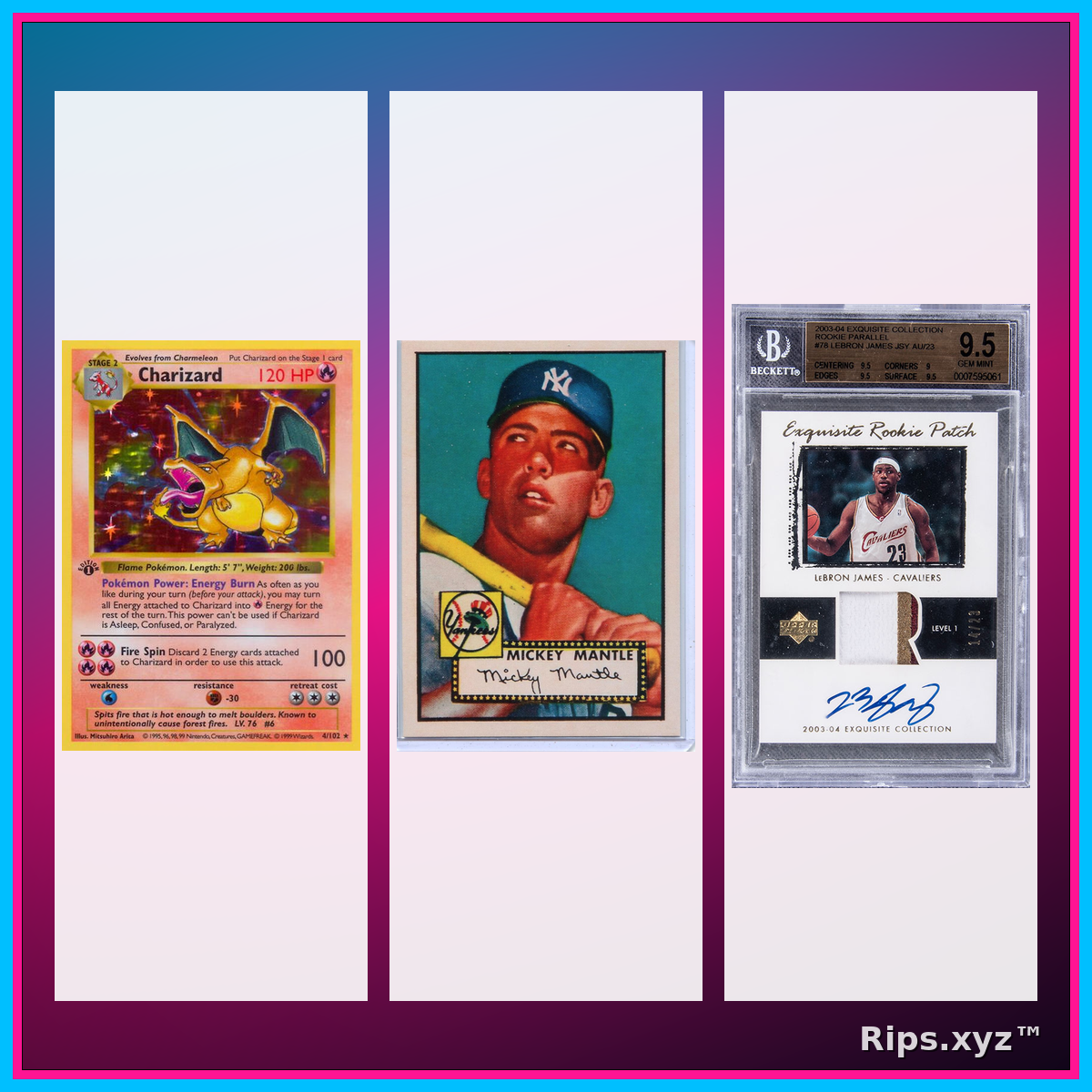
Listing is free; attention has value even without sales. Card markets amplify noise through SKU explosion (every grade is its own book), grading population shifts, split venues (eBay sold vs marketplace mid vs auction), and headline sales that move asks before bids—like the $12M Mantle effect.
What to trust, in order
Best — Completed sales. Auction hammers and confirmed sold listings.
Good — Two-sided quotes with recent sales. Tight bid-ask plus a sale in the last month or two.
Okay — Guide mid from aggregated sold data. Useful for baskets; risky for one-off chases. Comps smooth noise—and sometimes smooth away the last drop.
Weak — Single listing or algorithmic “market price.” Do not mark EV tracker here without a big haircut.
House — Rip platform display or buyback. Exit planning only; misleading for entry.
Common traps
- Unrelated cards reprice upward after a trophy sale elsewhere
- Sort order hides cheaper copies
- Wrong grade plugged into an EV tracker row—see pack-rip EV basics
- Ratio pricing to a moving anchor like Charizard when Charizard’s listing rose on no sales
Shared problem: visibility without sales.
Thin markets are normal
Check days on market for low listings. Filter to sold—empty history for months means suspect asks. Use best offers where enabled. Cross-check venues before averaging blindly. Match cert numbers exactly on slabs.
Rip platforms and virtual opens
Digital packs often show one “value” per chase. Watch for inventory marked to listing, buyback at “70% of market” where market means lowest ask, and stale odds tables. On-chain RWA floors can repeat the pattern.
Compare platform marks to sold data on card database. Read company oracle disclosure. If the source is “lowest listing,” haircut hard—or treat the session as entertainment.
When listings help
High asks can lead on brand-new chases with no sales yet, real supply shocks, or pre-auction anchoring. Rising asks with rising bids and sales is discovery; rising asks alone is noise.
Simple habit
- Primary mark: median recent sold for exact SKU (edition, language, grade, cert).
- Exit mark: buyback if that is your plan—not listing.
- Label lowest ask as “offer,” not net worth.
Use the same rules for every pack EV tracker row.
Checklist
Rank comp sources. Require recent sales or nearby bids for expensive cards. Cross-check two venues. Separate display from exit price. Screenshot odds at purchase. Haircut ask-only models.
The lowest listing is an advertisement. Real price discovery lives where money changed hands—or where a buyer’s offer sits close enough that a sale could happen soon. Rips.xyz™ is built for that layer.