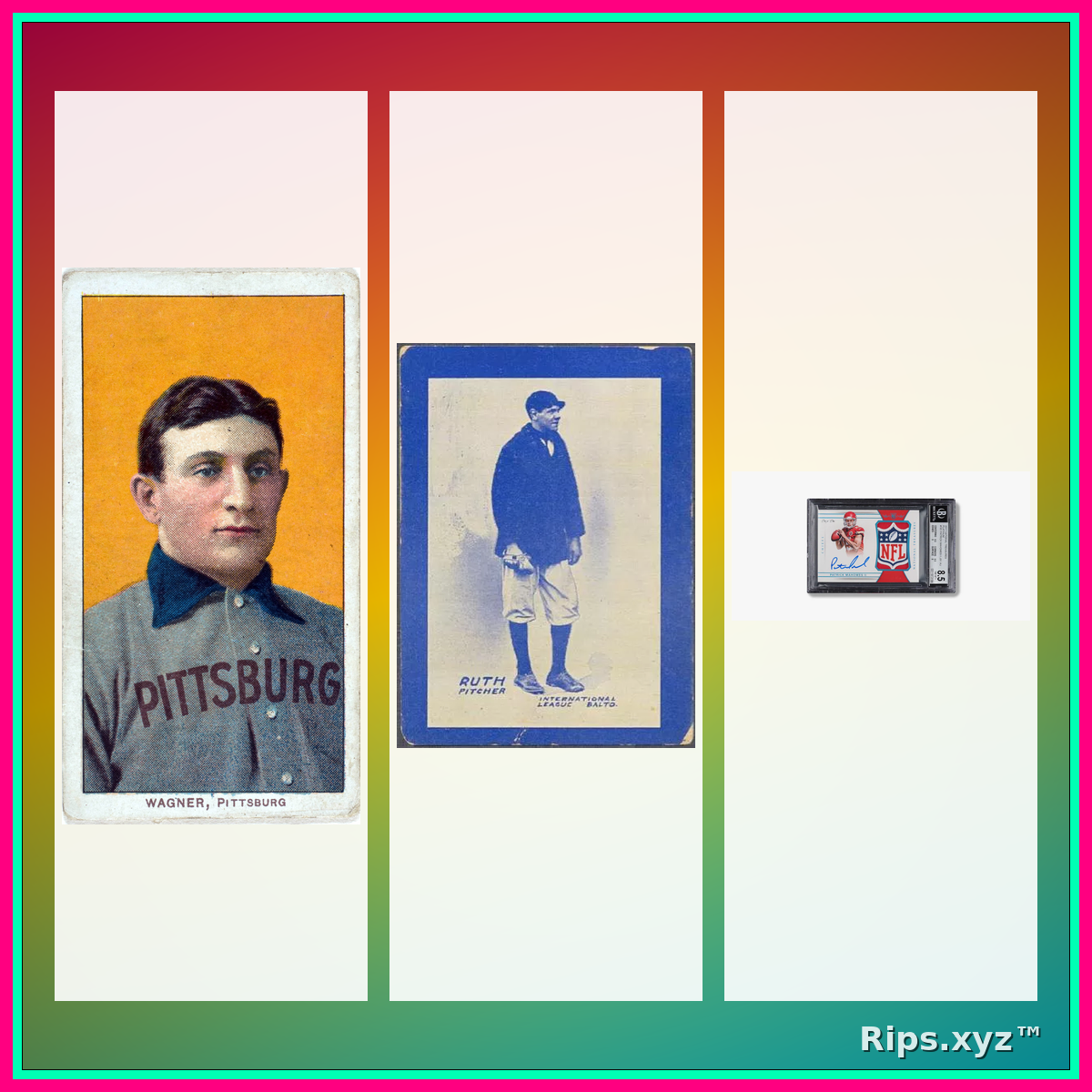
Trading cards did not start as investments. They were free prizes in cigarette packs, gum, and cereal—to sell something else. Today the same object type sells at auction, sits in vaults, and appears in digital pack rips as RWA inventory on Rips.xyz™. That journey explains why some cardboard behaves like a serious asset and most does not.
Tobacco premiums (early 1900s)
Tobacco brands printed portraits and tucked them into packs. The T206 set (1909–1911) bundled baseball players with cigarettes—cheap to print, expensive to complete. The job was marketing, not investing. Value formed by accident through loss and time.
Old does not mean scarce. Most premiums were printed in huge quantities. Survival and grading attrition created today’s trophy lane.
Gum cards and Topps (1950s onward)
Gum companies made cards the reason to buy the pack. Topps baseball in 1952 established the seasonal set: numbered checklist, star rookies, summer rhythm. Card shops and price guides gave collectors shared language. Cards were still mostly illiquid consumer goods—not balance-sheet assets. Every modern hobby box follows that 1950s template.
Junk wax and grading (1980s–1990s)
The junk wax print explosion proved cardboard is not automatically scarce. Millions of copies survived; most will never trade like trophies.
Two fixes reshaped the market: third-party grading (PSA, BGS) turned condition into numbered slabs for eBay-scale trade; factory-engineered scarcity—serials, autos, patches—moved scarcity from attics to print runs. Panini National Treasures became the brand for ultra-premium football hits: expensive boxes, on-card autos, dozens-not-thousands print runs.
Supply policy beats hype. Cards become serious collectibles when issuance, survival, and authentication limit float together.
National Treasures and modern trophy products
Top hobby products price like small alternative assets: high box prices, published /25 or /1 parallels, rookie+patch+auto hits, case structures built for livestream breaks. Secondary markets add FMV guides, buybacks, and vault custody guide.
National Treasures is not “better” 1988 Donruss—it is a different liquidity function. Browse football and baseball on Rips.xyz™ with that split.
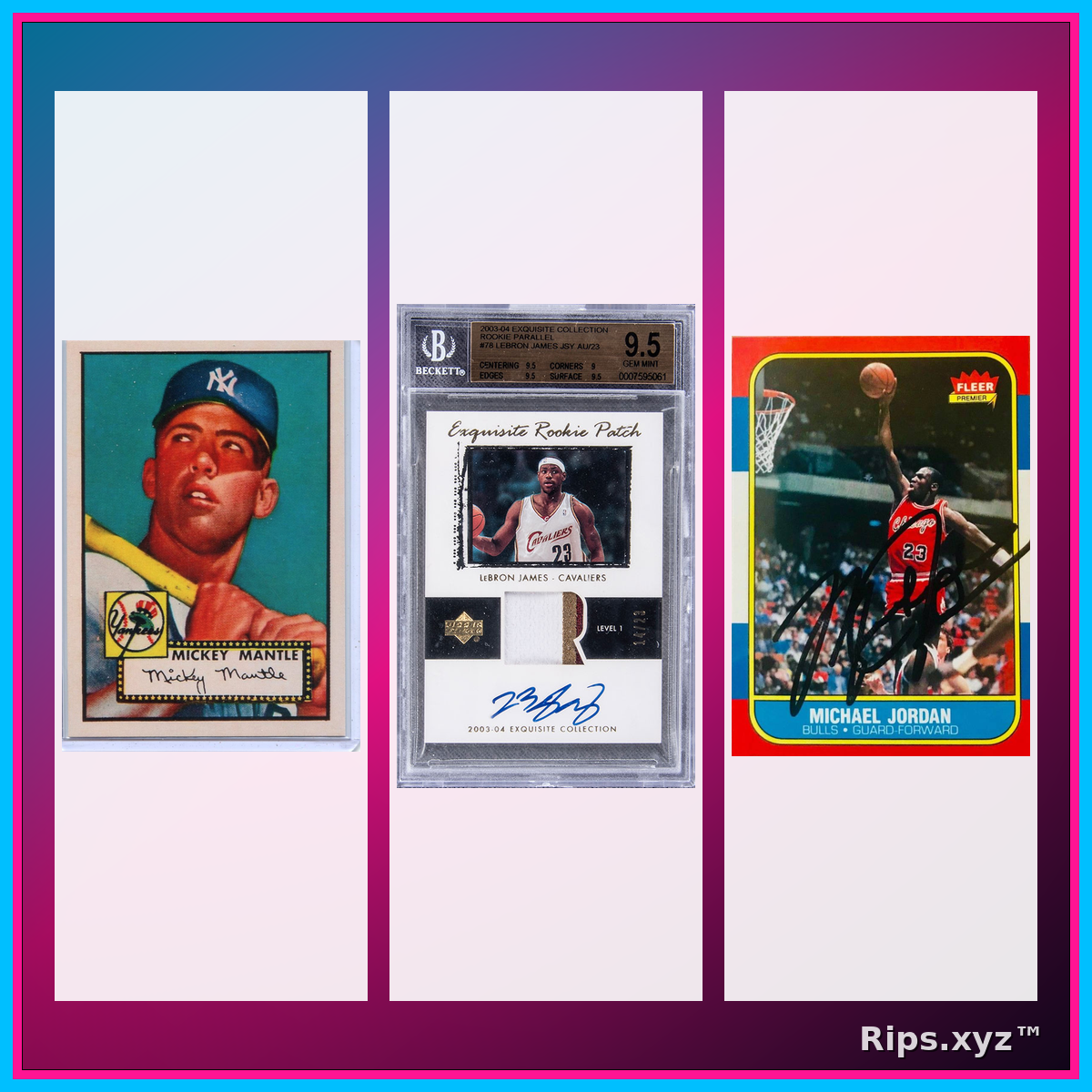
Three lanes today
Trophy lane — Pre-war tobacco, gem vintage, 1/1s. Auctions; sparse sales. Record Mantle trades live here.
Tradable lane — Modern base, inserts, most graded rookies, sealed wax. eBay, shows, weekly flow.
Entertainment lane — Rip products, break spots for content, bulk. Expected value beats trophy comps; variance dominates sessions.
Four scarcity types
- Survival — tobacco era, paper loss, attic condition
- Cultural — icons across generations
- Grade — condition bands from graders
- Policy — serial limits, licensing (Magic’s Reserved List is another flavor)
Rip platforms at the end of the arc
Digital rips advertise trophy hits while often funding tradable-lane filler. Pool composition beats animation. See Companies and EV tracker. Livestream commerce accelerated public opens—read how livestream breaks changed pack opening. Virtual rips are the next layer: same psychology, scalable UX.
Short checklist
Name scarcity type. Price exits in the correct lane. Treat grading as a supply line. Separate sealed from singles thesis. Model net EV tracker after fees.
Rips.xyz™ documents the arc so collectors do not pay trophy prices for entertainment outcomes.