Pokemon singles look affordable until you try to sell. A card that spiked after a viral clip may have high asking prices but few recent sales. That gap — between attention and actual trading — is hype tax: paying more than the card reliably sells for. Rips.xyz™ helps you track cards with prices you can defend.
What hype tax means
Hype tax is not paying extra for a card you want to keep. It is the gap between inflated asks and where cards actually sell.
Signs you may be overpaying: listings far above recent sales; volume that drops after launch week; graded copies priced like raw after a grading surge; price moves tied to streams, not supply.
Signs the price may be fair: steady sales over months; tight spreads on major marketplaces; sealed and break math supporting a floor under the single.
Liquidity tiers
Assign each card a tier before you look at price:
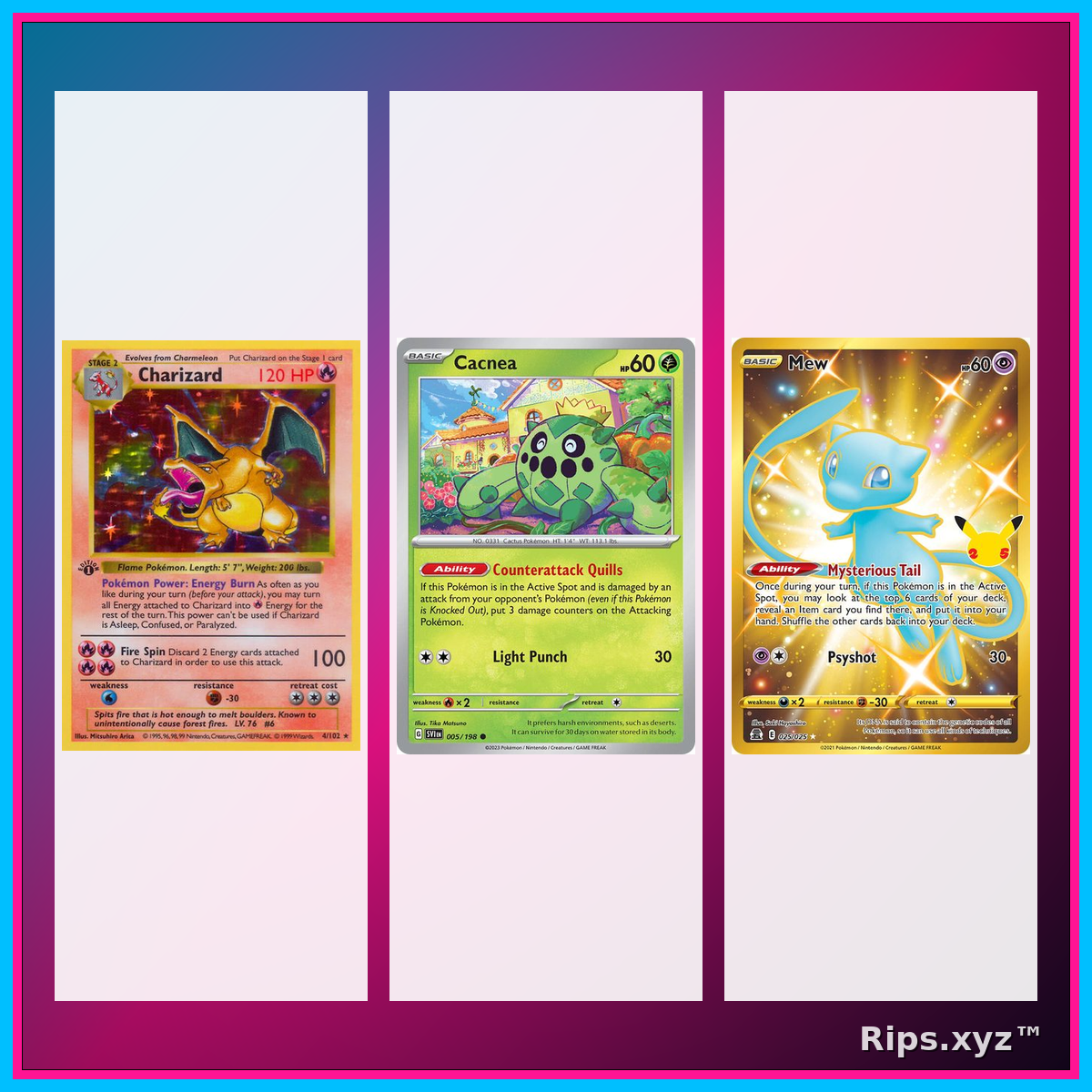
- Tier 1 — Benchmark icons — Charizard, major Pikachu promos. Deep sales history. Use as market thermometers.
- Tier 2 — Liquid set anchors — Modern alt arts with weekly sales. Track last-sale ranges, not lone asks.
- Tier 3 — Narrative names — Tournament wins, headlines, trends. Watch first; buy after volume confirms the level.
- Tier 4 — Thin markets — High asks, few sales. Skip unless you accept a slow exit.
Building the watchlist
Keep twenty to forty names in three buckets:
- Benchmarks (5–8) — Icons that calibrate the market across eras.
- Intent names (10–20) — Cards you would buy at a set price, with a one-line reason.
- Counterparty names (5–10) — Liquid cards you would accept in trades.
For each intent name, record set and number on card database, raw vs graded target, max bid from recent FMV sales (not asks), liquidity tier, and review date.
Example: SV151 #199 | raw NM | max $42 | Tier 2 | review 2026-08-15
Price discovery
Anchor on completed sales:
- Weight recent sales; ignore unexplained outliers.
- Require minimum sales over 30/90 days before trusting a comp.
- Compare across marketplaces — one venue’s ask wall should not set your bid.
- For PSA slabs, watch population growth on modern chases.
Your max bid should sit below credible sale prices minus fees — not at the highest ask. Rips.xyz™ Analytics and card database shorten this loop. Rule of thumb: no recent sale, no comp upgrade.
Modern vs vintage
Modern — Narrative premiums often fade after set rotation. Chase cards can reappear in special sets. Grade premiums compress when many copies get graded.
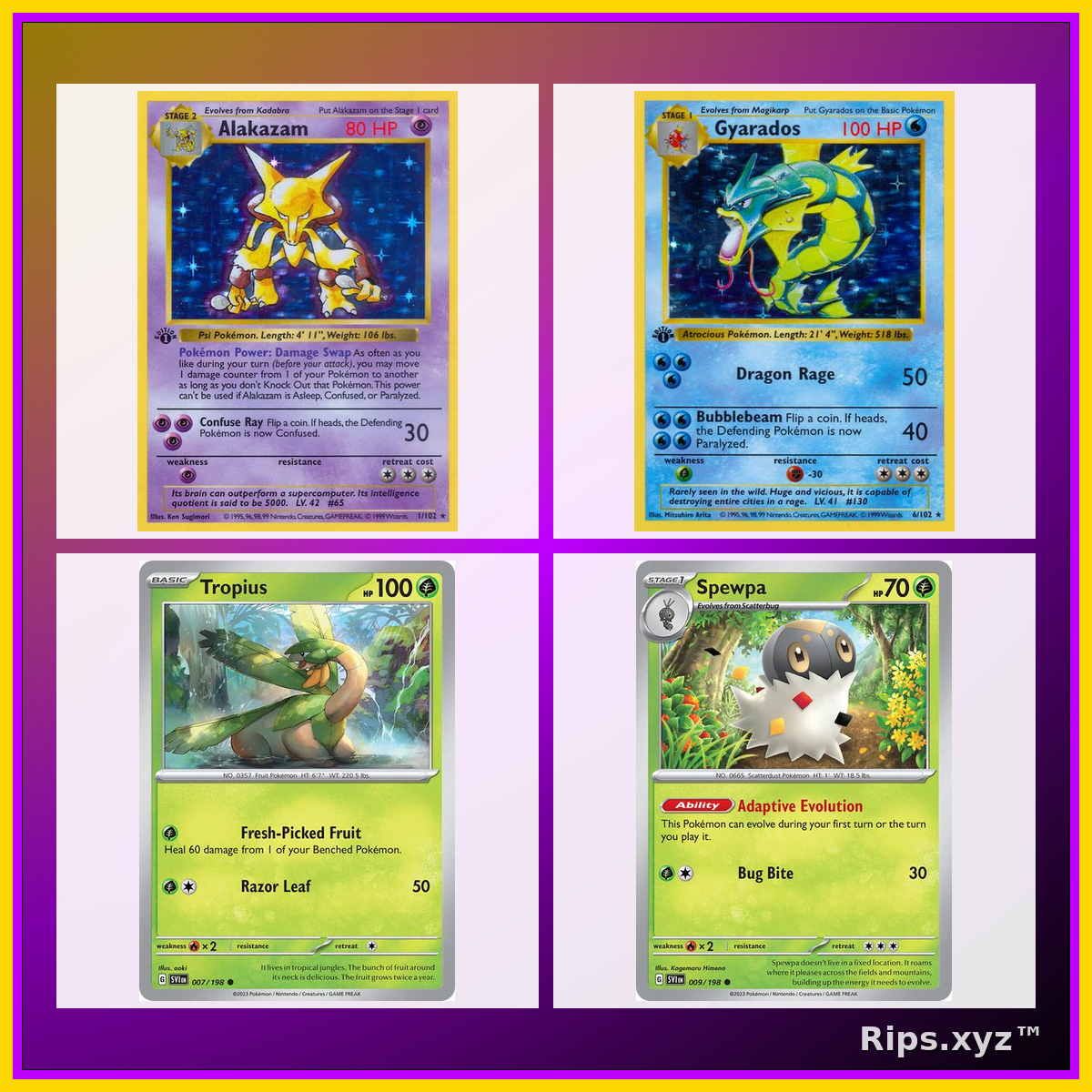
Vintage — Top icons have deeper history. Condition matters more; raw and graded comps are not interchangeable without adjustment. Mid-tier holos can sit unsold for months.
Label each name as long hold or active trade so you apply the right patience.
Grading and maintenance
Before paying slab premiums or submitting raw copies, compare grade spread economics — PSA 10 vs PSA 9 pricing minus fees — and watch population growth.
Weekly (~15 min): refresh Tier 1–2 sales; lower max bids on ask-only rallies.
Monthly (~30 min): promote or demote tiers; compare intent names to sealed product and pack expected value; archive removed names with a one-line note.
Remove a name when sales volume drops, asks rise without sales, a reprint breaks your thesis, or your max bid has not cleared in months.
Checklist
- Confirm set, number, condition on card database.
- Assign liquidity tier before price.
- Pull 30/90-day sales and volume.
- Set max bid from sales minus fees; write it down.
- One-sentence thesis and review date.
- Compare to sealed, raw upgrade, or a more liquid chase card proxy.
A good watchlist is not what is trending — it is what you can buy and sell with confidence.