A live break splits sealed product among buyers who each own a “spot.” You watch the rip live and receive cards matching your spot’s rules. Most buyer regret is not bad luck — it is buying before reading the terms. Rips.xyz™ treats live breaks as contracts: understand the rules before you pay.
1. Start with the break format
Common formats: team breaks, random team, pick-your-team (PYT), division, player, serial splits. Each produces different outcomes. Buying the Chiefs in PYT is not the same as a random-team spot at the same price.
Write down before paying:
- Allocation rule — What do you get on a hit? (Team, player, slot?)
- Product scope — One box, case, mixed years, or repack?
- Floor behavior — Do base cards ship, donate, or raffle?
- Fill policy — What if spots do not sell out?
If the breaker says “we’ll figure it out live,” you are buying discretion, not a defined product.
2. Reconstruct spot pricing
Spot price should relate to sealed cost ÷ number of spots, plus the breaker’s fee.
- Estimate wholesale or secondary sealed cost.
- Divide by total spots for break-even.
- Anything above is the breaker’s margin.
Then estimate hit value for your slot using recent FMV sales — not asks. Cross-check with expected value logic. If you cannot estimate a rough range in fifteen minutes, treat the spot as entertainment.
3. Randomization
Ask for evidence before the rip:
- Which randomizer? (Wheel of Names, LiveBreaks, etc.)
- Slot list or seed posted before the spin
- No spot swaps after sales close without a published refund policy
- VOD of the actual spin, not just the hit reveal
No slot list before randomization = unknown edge. Size accordingly.
4. Operator and platform
Breaker: track record, dispute history, rule consistency, shipping speed.
Platform: buyer protection, fee stack, whether hits are vaulted or shipped direct.
Cross-reference on company pages when breakers also run digital rips. Red flags: no VOD, off-platform payment pressure, post-purchase spot swaps.
5. Shipping and hidden costs
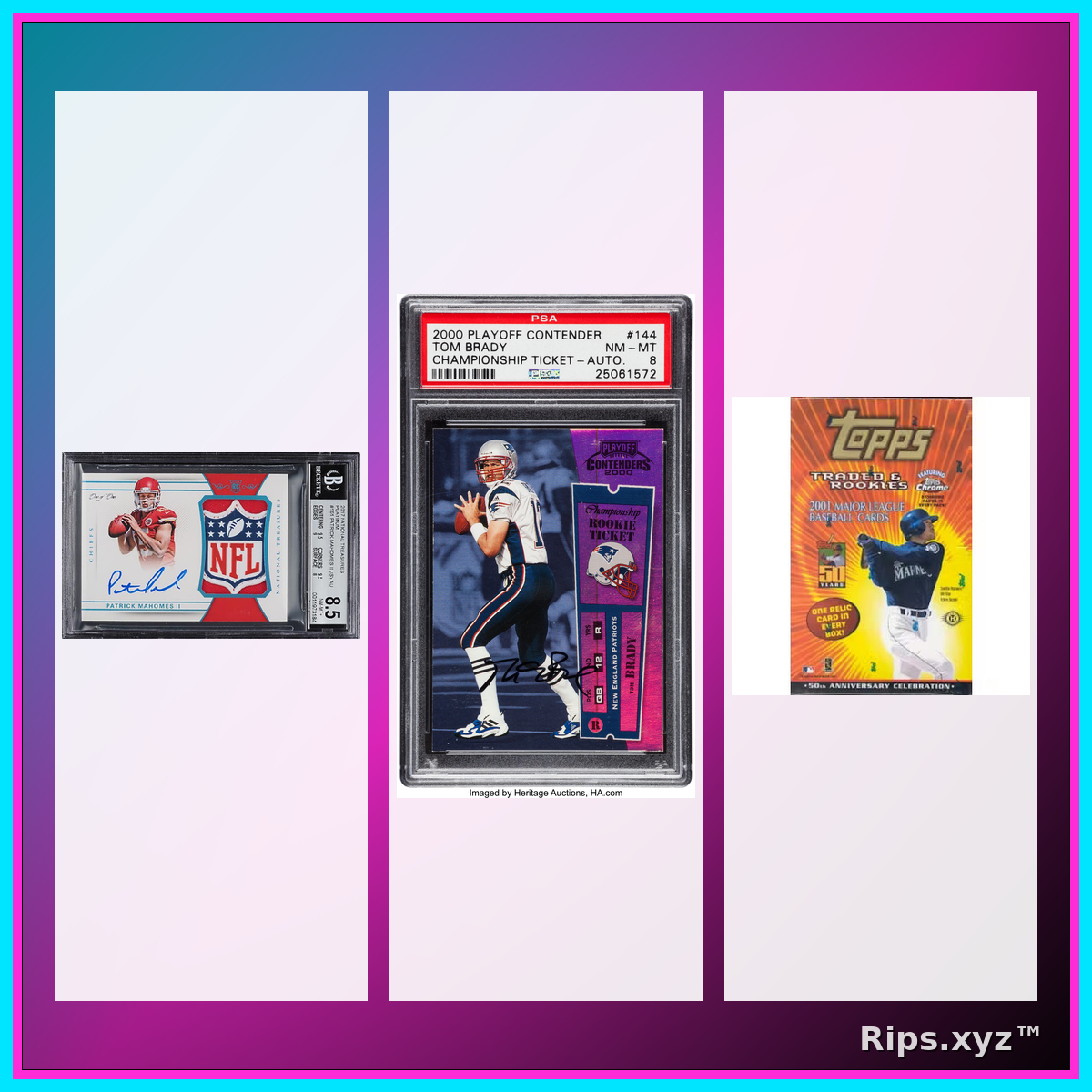
Check whether shipping is included, packaging standards, consolidation policy, insurance caps, and grading submission terms. Slow shipping is a hidden cost — same as illiquid slab inventory.
6. Product authenticity
Look for factory wrap on camera, lot photos for high-end cases, no undisclosed pre-opened boxes, and clear policy on leftover sealed product. Confirm exact product name — a “Prizm break” that is Draft Picks is a different card pool. Use card database to anchor set names.
7. When breaks make sense
Reasonable when: you want tail exposure without a full case; sealed basis is fair; rules and randomization are documented; entertainment is a separate budget line.
Poor fit when: PYT embeds a favorite-team premium; the single you want costs less on eBay or TCGPlayer; rules are vague or shipping erodes value; you buy because the stream is hot.
Compare to sealed product and singles — same framework as EV tracker for pack rips.
Checklist before buy
- Write rule set — allocation, floors, fill policy.
- Estimate spot cost from sealed basis ÷ spots.
- Model value range from recent sales on realistic chases.
- Verify randomization tool, slot list, recording.
- Read shipping — all-in cost, not sticker price.
- Screenshot listing and chat rules at purchase.
- Cap exposure if diligence is incomplete.
Read terms first. Watch the spin second. Rips.xyz™ Glossary, card database, and EV tracker tools make review faster — the randomizer still has to earn your trust.